Water leak detection · Wake Forest, NC
Water Leak Detection in Wake Forest, NC
The leak is usually not where the damage shows up.
- Same-day response
- 24/7 emergency calls
- Upfront pricing
Signs you have a water leak in Wake Forest
Start with the one check you can do yourself. Then look for the signs below.
The 30-minute meter test
Write down the meter reading, make sure nothing is running, and take a second reading 30 minutes later. If the number moved, water is leaving your system.
A bill that jumped
Usage you cannot explain is the most common first clue. Compare this bill to the same month last year, not just last month.
A warm spot on the floor
Walk barefoot across tile and slab areas. A warm patch often means a hot-water line is leaking under the concrete.
Musty smell or damp carpet
Sniff along baseboards and press carpet near exterior walls. A musty odor with no visible stain still counts.
Bubbling paint
Paint that blisters or peels in one spot is holding water behind it. Do not scrape it open; note the location.
Stained drywall
Yellow-brown rings on a wall or ceiling mark where water pooled. The entry point is usually uphill from the ring.
Running water, no tap open
Put your ear to the wall near the water heater or the main line. A faint hiss or rush with everything off means flow somewhere.
A toilet that refills by itself
Put food coloring in the tank and wait 20 minutes without flushing. Color in the bowl means the flapper is leaking.
Water leak detection services in Wake Forest
We connect you with local pros for each kind of water leak. Every service below becomes its own detailed page; for now, each link jumps to its spot on this page.
- 01Slab leak detectionFinding hot and cold line leaks under the concrete slab before the floor is opened.
- 02Underground and main water-line leak detectionTracing the service line from the meter to the house, including yard and driveway runs.
- 03Wall and ceiling leak detectionPinpointing supply and drain leaks inside walls and above ceilings without opening large sections.
- 04Pool and spa leak detectionSeparating normal evaporation from a real leak, then finding it in the shell, plumbing, or equipment.
- 05Irrigation and sprinkler leak detectionLocating broken heads, cracked lateral lines, and stuck valves that keep zones running.
- 06Pipe repair once the leak is locatedA simple coupling where the line is sound, or a re-route around the slab where it is not.
Do home water leak detectors work?
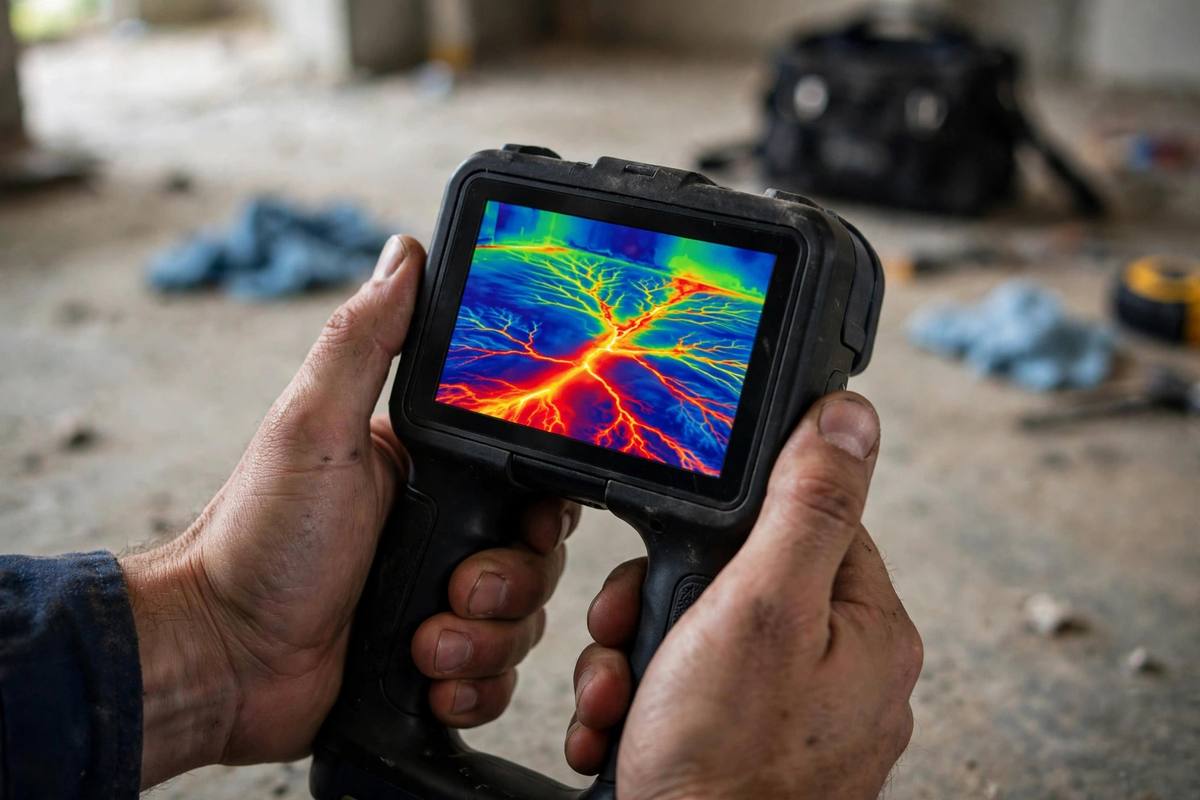
A store-bought water leak detector, the kind that sits on the floor and beeps, only tells you that water is present near its sensor. It cannot tell you where the water came from, how far the line runs, or whether a second leak exists. Professional detection is different: acoustic listening follows the sound along the pipe, thermal imaging shows temperature changes in the wall and floor, and pressure tests confirm the zone. A gadget alerts you; detection finds the point.
Found without tearing up your floor
The process follows one order, and each step narrows the search before anything is opened.
- Isolate at the meter
The main valve is shut and the meter is watched to confirm flow, then the house is split into zones.
- Acoustic listening along the line
A ground microphone follows the hiss of pressurized water escaping the pipe, marking the loudest point.
- Thermal imaging of wall and floor
An infrared camera scans for the warm or cool signature of water spreading through concrete and drywall.
- Zone pressure test
Each section of line is pressurized separately so the leaking zone is proven, not guessed.
- Confirm with a meter test or tracer gas
A second meter reading, or a safe tracer gas tracked at the surface, verifies the marked point.
- Mark the exact point before anything is opened
The spot is marked on the floor or wall, and you get a detailed written estimate for the repair. Concrete or drywall is opened only at the mark, which is how the problem is confirmed fixed with the smallest possible opening.
Leak confirmed or just suspected?
Either way, the next step is the same: a local pro traces the line and marks the point. One call starts it.
Call for Same-Day ServiceSame-day response · 24/7 emergency calls
What to do right now
These steps are safe for any homeowner and they limit the damage while you wait.
- Find the main shut-off
It is usually at the meter box near the street or where the line enters the house. Turn it clockwise to close.
- Run the meter test
Write the reading down, wait 30 minutes with nothing running, and read it again. A moving meter confirms the leak.
- Turn off the water heater if the leak is on the hot side
A warm floor spot or hot water at a cold tap points to the hot line. Switch the heater off so it does not run dry.
- Move furniture and valuables
Lift rugs, shift furniture off damp carpet, and move boxes and electronics away from the wet area.
- Do not open walls or floors yourself
Cutting drywall or concrete without a marked point spreads the mess and rarely finds the leak. The mark comes first.
What leak detection costs in Wake Forest
There is no single price for finding a leak, because every home and every leak is different. What changes the final price is listed below. You get upfront pricing and a detailed written estimate before any repair work starts.
| Cost factor | What it means for the price |
|---|---|
| Slab vs wall vs underground | Under-slab and underground lines take more tracing equipment and time than an exposed wall line. |
| Access difficulty | Carpet, tile, and concrete slow the scan; an open crawlspace or basement speeds it up. |
| How much line has to be scanned | A long supply run from the meter takes longer to trace than a short branch. |
| After-hours call | Nights, weekends, and holidays carry a different rate than a weekday visit. |
| Suspected second leak | If the first repair does not stop the meter, each additional zone adds scanning time. |
| The repair itself | A simple coupling at the marked point costs less than a re-route around the slab. |
Serving Wake Forest and 27587
We connect homeowners across Wake Forest, North Carolina 27587, including these communities:
- Heritage
- Holding Village
- Traditions
- Downtown Wake Forest
The housing mix here runs from older downtown homes with original plumbing to newer Heritage and Holding Village builds with long supply runs, so slab, wall, and underground leaks all show up in 27587.
Water leak questions, answered
Straight answers, no jargon. Tap any question to open it.
How do I know if I have a slab leak?
A slab leak usually shows up as a warm spot on the floor, the sound of running water under the concrete, a climbing water bill, or damp carpet near the slab edge. The meter test confirms it: write down the reading, wait 30 minutes with nothing running, and read it again. If the number moved, water is leaving the system somewhere.
Can a leak be found without breaking concrete?
Yes. Acoustic listening, thermal imaging, and zone pressure tests narrow the leak to a marked point before anything is opened. Concrete is cut only at that marked spot, which keeps the repair area as small as possible.
Why is my bill up with nothing visibly leaking?
Most leaks never show on the surface. Slab lines, wall cavities, and underground mains can lose water for weeks while the only sign is the bill. Run the 30-minute meter test with everything off; a moving meter proves water is escaping even when you cannot see it.
How long does leak detection take?
Most home checks are finished in a single visit. Long supply runs, hard-to-reach lines, or a suspected second leak can take longer. The contractor can tell you what to expect once the layout is mapped at the meter.
Should I shut my water off overnight?
If the meter moves with nothing running, shutting the main valve off overnight stops the damage from growing while you wait for help. If the leak is on the hot side, switch the water heater off first so it does not run dry.
Is a home water leak detector as good as professional detection?
No. A store-bought alarm only tells you water is present near its sensor; it cannot tell you where the water came from. Professional detection traces the line with listening and thermal equipment and marks the exact point of failure.
Does homeowners insurance cover leak detection?
It depends on the policy. Some policies cover the cost of finding the leak but not the pipe repair itself, and coverage often hinges on whether the damage was sudden or gradual. Check the policy wording or ask the agent before work starts.
What happens after the leak is found?
The exact point is marked, and you receive a detailed written estimate for the repair before anything is opened. The repair itself, whether a simple coupling or a re-route around the slab, is scheduled as its own job.
Water showing up where it should not?
Call now and get connected with a local leak-detection pro in Wake Forest. Same-day response, 24/7 emergency calls, upfront pricing.
Call for Same-Day ServiceA free service connecting homeowners with independent local contractors.